A lot of the production industry still operates according to rules created when cameras were enormous, editing systems cost a fortune, and you needed a small army to make anything worth watching.
Technology changed. Creators changed. Audiences changed.
The model mostly didn’t.
That was part of the thinking behind District Studios, which I created with Steve Walter at District, the technology and innovation campus in New Haven, Connecticut. We wanted to build more than another video production studio. The idea was to create an actual creative community: give local filmmakers, photographers, editors, musicians, and creators more access to opportunities, while giving brands access to talent they probably wouldn’t find through a traditional production model.
I also wanted to rethink how the work itself got made.
I came into it with years of experience in television, sports production, advertising, and branded content, where I’d watched productions become unnecessarily complicated simply because “that’s how production works.” Meanwhile, a new generation of creators was producing remarkably good work with smaller crews, lighter equipment, overlapping skills, and far less ceremony.
So we borrowed from both worlds.
District Studios was built around flexible teams and creators who could move between disciplines, making video, photography, and audio production faster, more accessible, and considerably less expensive without treating quality like the thing we were willing to sacrifice.
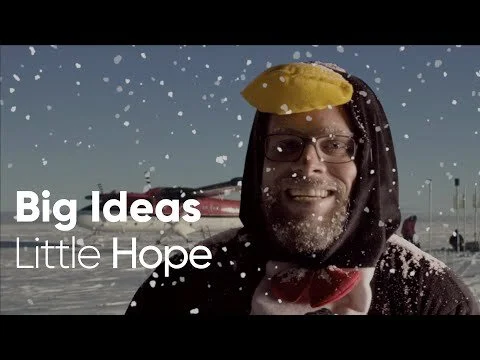
One of the first videos to come out of the emerging studio was something I shot and edited myself.
And then it won a Telly Award! (Amongst others.)
I was genuinely surprised people liked it that much.
My favorite part of that project happened in the edit. I was cutting the voiceover when I realized the script was missing something important. The story needed a turn. There was no tension, no moment that changed the direction of the narrative and pushed us into the next part.
There was also no opportunity to rerecord it.
So I made a sentence.
Not wrote one. Made one.
I went through the existing voiceover and painstakingly assembled the missing thought piece by piece. A word from here. Another word from there. Eventually individual sounds and syllables. I stitched together an entire sentence that had never actually been spoken by the person whose voice was saying it.
Which is either an impressive example of resourceful editing or mildly terrifying, depending on how you feel about the future.
But it worked.
And, in a strange way, that little edit represented what I wanted District Studios to be about. Don’t assume the old process is the right process just because it’s the familiar one. Understand what you’re trying to accomplish, understand the tools and people available to you, and then build the smartest way to get there.
Sometimes that means assembling a different kind of production team.
Sometimes it means creating an entirely different production model.
And sometimes it means stealing individual syllables from someone until they say exactly what you need them to say.