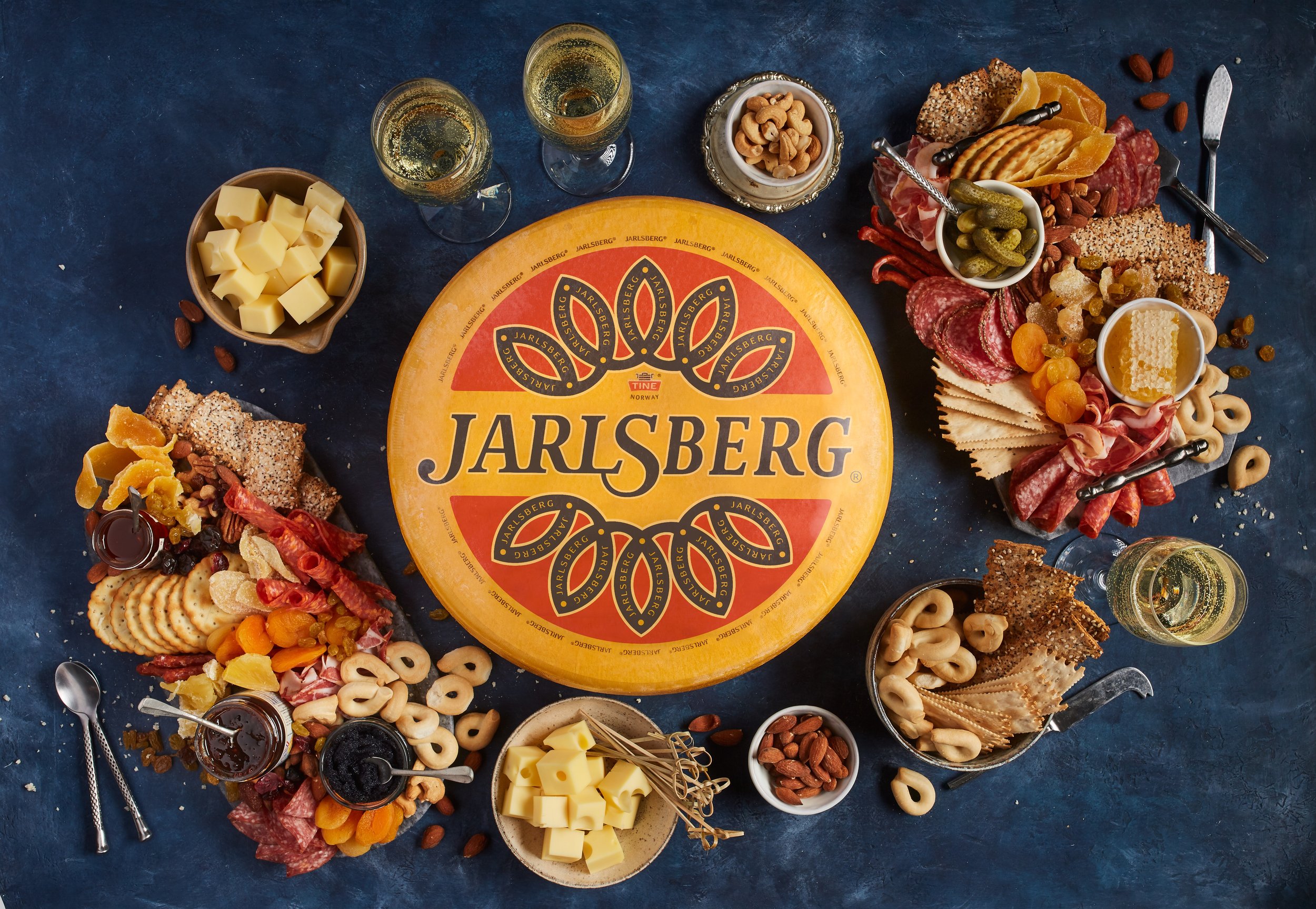
Jarlsberg had a problem. Its consumers were aging, younger audiences weren’t forming the same attachment to the brand, and the cheese had started to feel more nostalgic than relevant. We were brought in to help change that.
I led the work from concept through production, but getting there was not exactly a calm, orderly process.
Another creative lead and team had presented an early round of ideas that went badly enough that they were removed from the room, and their CEO made it very clear that if we didn’t have something dramatically better by the end of the week, we were done. It was Wednesday.
So Thursday became one of those great, slightly unhinged creative days where there wasn’t time to overthink anything. My team and I tore the problem apart, generated ideas, built mockups, challenged each other, and worked until we had something we actually believed in. Huge credit to Jimmy Burt and Inessa Yusapov for going into the foxhole with me on that one.
We presented Friday.
We saved the account.
From there, I led the campaign through creative development and production, including directing commercial work and helping rethink how we could produce more content, faster, without losing the energy of the idea. That eventually led me to develop what I called the House Party Model: instead of treating production like a traditional shoot where everyone arrived, worked, and disappeared at the end of the day, we put the cast and crew in the production house together and basically created around the clock.
It was efficient. It was immersive. It was probably not a model designed to make me especially popular with unions.
One of those productions happened to be in an old house that our makeup artist refused to enter because she immediately believed it was haunted. I stayed there for a couple of nights.
She was correct. Haunted.
There were other strange perks to the account, too. At one point, the client shipped my team roughly 300 pounds of Jarlsberg cheese. We did what any responsible agency would do and turned a significant portion of it into thank-you gifts for the crew.
The work itself helped reposition Jarlsberg for a younger audience and quickly validated the strategy in market, but what I remember most is how it came together: a deadline, a near-disaster, a team willing to sprint toward the problem, and a production model we invented because the old way didn’t make sense for what we needed to make.
Sometimes creative leadership is having the idea.
Sometimes it’s making sure the whole thing survives until Friday.